You spend hours creating valuable content. If you’ve been wondering why your website is not ranking on Google, you’re not alone. Many website owners and marketers face the same challenge. Even high-quality content can struggle to rank if important SEO signals are missing.
You research keywords, write carefully, optimize your pages, and publish consistently. Yet weeks later, your website still isn’t showing up where you expect it in Google search results.
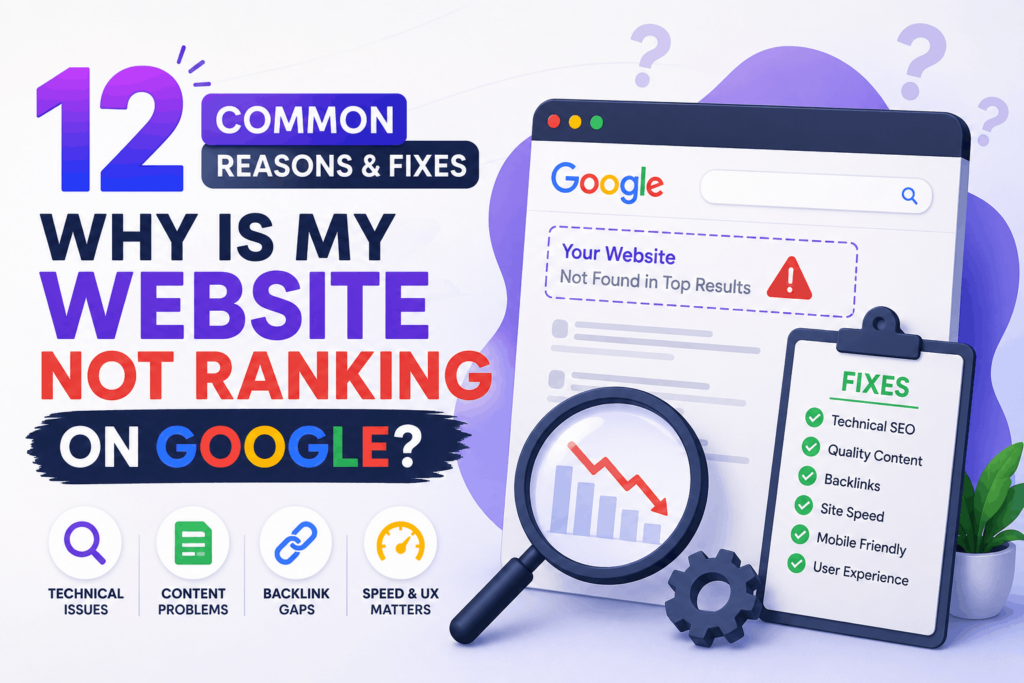
The truth is that Google uses hundreds of ranking factors to decide which pages deserve visibility. Content quality is important, but it’s only one piece of the puzzle.
In this guide, you’ll learn:
- Why your website is not ranking on Google
- Common SEO mistakes that hurt rankings
- How Google evaluates pages
- Practical fixes to improve visibility
- How to diagnose ranking problems
How Google Decides Rankings
Before understanding why your website is not ranking on Google, it’s important to understand how Google processes a page.
Google generally follows three steps:
1. Crawling
Googlebot visits your website to discover new and updated pages.
Common crawling issues include:
- Broken internal links
- Poor website structure
- Slow page speed
- Blocked pages in robots.txt
If Google cannot crawl your page efficiently, it may never have the opportunity to rank.
2. Indexing
After crawling, Google decides whether your page deserves a place in its index.
The page might not get indexed if the content isn’t good or there aren’t any strong Technical SEO signals.
Pages may fail to get indexed because of:
- Thin content
- Duplicate content
- Poor technical SEO
- Low-quality pages
If a page isn’t indexed, it cannot rank.
3. Ranking
Once indexed, Google evaluates hundreds of ranking signals, including:
- Relevance to the search query
- Content quality
- Website authority
- User experience
- Backlinks
- Search intent satisfaction
These factors determine whether your page appears on page one or remains buried in the search results.
12 Common Reasons Why Your Website Is Not Ranking on Google
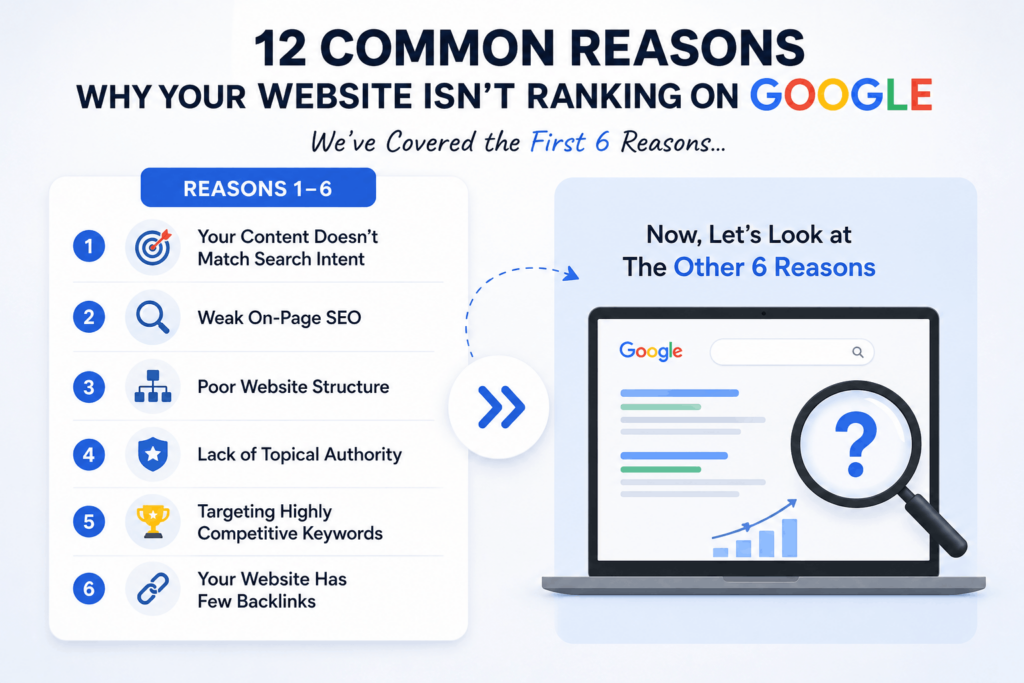
1. Your Content Doesn’t Match Search Intent
One of the biggest reasons a website is not ranking on Google is search intent mismatch.
For example:
If someone searches:
“How to improve website SEO”
they want actionable advice.
If your content focuses only on definitions and theory, Google may rank another page that provides practical solutions.
How to Fix It
- Analyze the top-ranking pages
- Understand what users expect
- Provide clear solutions
- Answer the main question quickly
2. Weak On-Page SEO
Even great content can struggle without proper on-page optimization.
Important elements include:
- Optimized title tags
- Keyword-focused headings
- Compelling meta descriptions
- Internal links
- Image alt text
- Clear content structure
Missing these basics often leads to poor rankings.
3. Poor Website Structure
A confusing website structure makes it harder for both users and search engines to navigate your content.
Common issues include:
- Orphan pages
- Deep page hierarchy
- Weak internal linking
- Unorganized categories
How to Fix It
- Create clear content categories
- Link related articles together
- Build topic clusters
- Improve navigation
4. Lack of Topical Authority
Google increasingly rewards websites that demonstrate expertise in a specific subject.
If your website covers unrelated topics such as:
- SEO
- Finance
- Travel
- Health
Google may struggle to understand your expertise.
How to Fix It
Build topic clusters around your niche.
For example, an SEO website could publish content on:
- On Page SEO
- Technical SEO
- Link building
- GEO
- AI SEO
- Google updates
This strengthens topical authority and improves rankings.
5. Targeting Highly Competitive Keywords
Many websites fail because they target keywords that are too competitive.
Examples:
- SEO
- Marketing
- AI
These keywords are dominated by high-authority websites.
Better Approach
Target long-tail keywords such as:
- Why is my website not ranking on Google
- How to improve website SEO
- On-page SEO tips for beginners
Long-tail keywords are easier to rank for and often convert better.
6. Your Website Has Few Backlinks
Backlinks remain one of Google’s strongest ranking signals.
If competitors have hundreds of quality backlinks and your page has none, rankings will be difficult.
How to Fix It
Focus on:
- Guest posting
- Digital PR
- Resource page links
- Industry citations
- Quality directory listings
7. Your Website Is Too New
Many website owners expect rankings within a few weeks.
However, new websites often need time to build:
- Trust
- Authority
- Content depth
- Backlinks
A newer website may take several months before seeing significant ranking improvements.
8. Slow Website Speed
Page speed affects both user experience and SEO.
Slow websites often experience:
- Higher bounce rates
- Lower engagement
- Reduced rankings
Improve Speed By
- Compressing images
- Using caching
- Reducing unnecessary plugins
- Improving hosting quality
9. Your Website Isn’t Mobile Friendly
Google uses mobile-first indexing.
If your website performs poorly on mobile devices, rankings may suffer.
Check:
- Mobile usability
- Page speed
- Navigation
- Readability
10. Your Content Is Thin or Outdated
Google prefers comprehensive and up-to-date content.
If your article is:
- Too short
- Missing examples
- Missing data
- Outdated
competitors may outrank you.
How to Fix It
Regularly update content with:
- New statistics
- Fresh examples
- Industry updates
- Additional insights
11. Your Page Is Indexed But Not Ranking
A common situation is when a page appears in Google’s index but still receives no rankings.
This usually happens because:
- Competition is stronger
- Content is weak
- Search intent is unclear
- Authority is insufficient
Being indexed does not automatically mean you will rank.
12. Technical SEO Issues
Technical SEO problems can prevent rankings even when content is excellent.
Common issues include:
- Crawl errors
- Broken links
- Duplicate content
- Incorrect canonical tags
- Poor Core Web Vitals
Regular technical audits help identify these issues before they affect rankings.
Why Is My Content Not Ranking on Google?
Sometimes the problem isn’t the website—it’s the content itself.
Content often fails to rank because:
- It doesn’t satisfy search intent
- It lacks depth
- It isn’t updated regularly
- Competitors offer better information
- Internal links are missing
Improving content quality and topical relevance can significantly increase rankings over time.
How Long Does It Take a Website to Rank on Google?
There is no exact timeline.
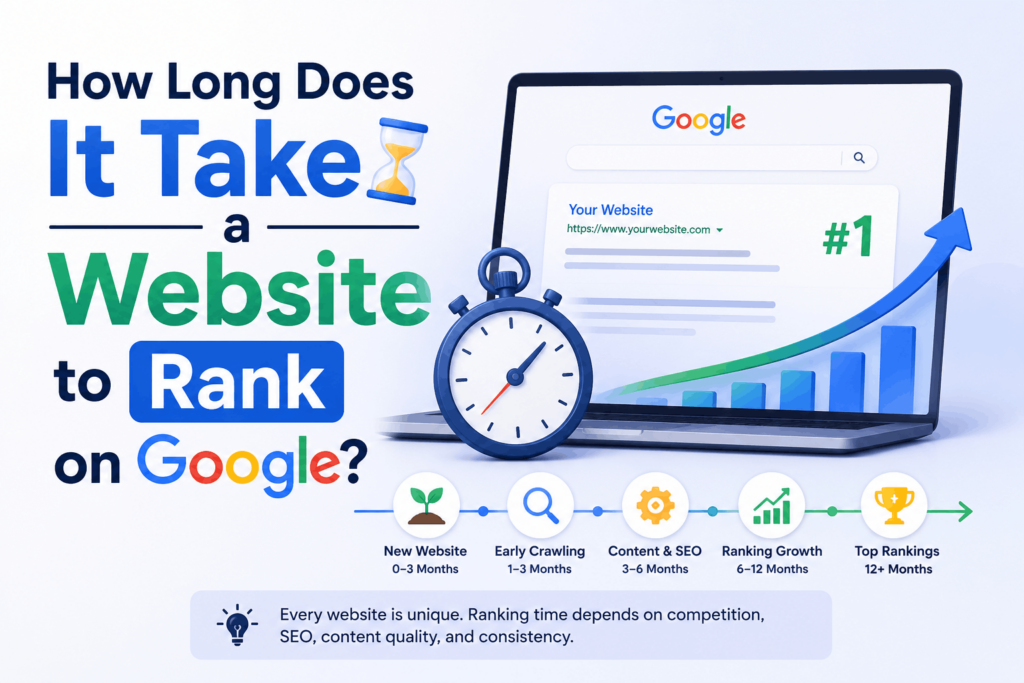
Generally:
- New pages: 1 – 3 months
- New websites: 3 – 12 months
- Competitive keywords: 6 – 12+ months
Results depend on:
- Competition
- Authority
- Content quality
- Backlinks
- Technical SEO
SEO is a long-term process, not an overnight strategy.
How to Check Why Your Website Is Not Ranking
Use this simple checklist:
- Check Google Search Console
- Is the page indexed?
- Are impressions increasing?
- Are there crawl issues?
- Analyze Competitors
- Who ranks above you?
- How comprehensive is their content?
- How many backlinks do they have?
- Review Technical SEO
- Site speed
- Mobile usability
- Internal linking
- Core Web Vitals
- Evaluate Content Quality
- Does it satisfy search intent?
- Is it more helpful than competitors?
- Is it updated?
How AI SEO Can Help Improve Rankings
AI SEO tools can help identify issues such as:
- Missing keywords
- Content gaps
- Poor readability
- Search intent mismatches
However, AI should support your SEO strategy—not replace human expertise.
The best results come from combining AI insights with strong SEO fundamentals.
Can Social Media Help Rankings?
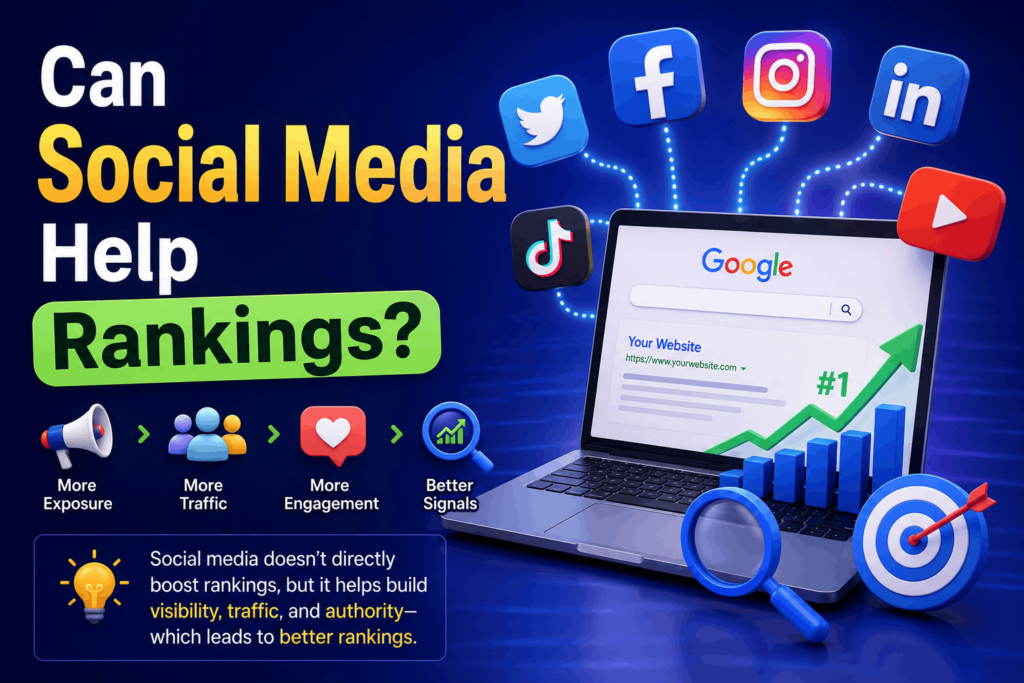
Social media is not a direct ranking factor.
However, it can indirectly help by:
- Increasing brand awareness
- Driving traffic
- Generating backlinks
- Encouraging content sharing
These signals can support long-term SEO growth.
Final Thoughts on Why Is My Website Not Ranking on Google?:
If you’ve been asking, “Why is my website not ranking on Google?” the answer is usually not a single issue.
Most ranking problems occur because of a combination of factors:
- Weak on-page SEO
- Poor website structure
- Limited authority
- Technical SEO issues
- Search intent mismatches
- Insufficient backlinks
The good news is that most of these problems can be fixed.
By improving content quality, strengthening internal linking, building authority, and maintaining strong technical SEO, you can gradually improve your visibility and rankings in Google search results.
Remember: SEO is a long-term investment. Consistent improvements today can turn a website that isn’t ranking into one that generates steady organic traffic for years to come.
FAQ
1. Why is my website not ranking on Google?
The most common reasons include poor search intent matching, weak on-page SEO, lack of backlinks, technical issues and strong competition.
2. Why is my website indexed but not ranking?
A page can be indexed but still fail to rank if the content is weak, authority is low, or competitors provide better information.
3. How long does it take to rank on Google?
New pages typically take 1–3 months, while new websites may need 3–12 months to gain meaningful rankings.
4. Why is my content not ranking on Google?
Content often fails to rank because it doesn’t satisfy search intent, lacks depth, is outdated, or has insufficient authority.
5. Can a new website rank on Google?
Yes. New websites can rank, but they usually need time to build authority, publish quality content, and earn backlinks.