A lot of websites have great content but still can’t get high rankings on Google, which often leads to confusion about why your site is not ranking despite consistent publishing efforts.
A lot of the time, the content isn’t the problem; it’s technical SEO mistakes that are happening behind the scenes.
Search engines use things like crawlability, indexability, site architecture, and page speed to figure out what your website is about and how to rank it.
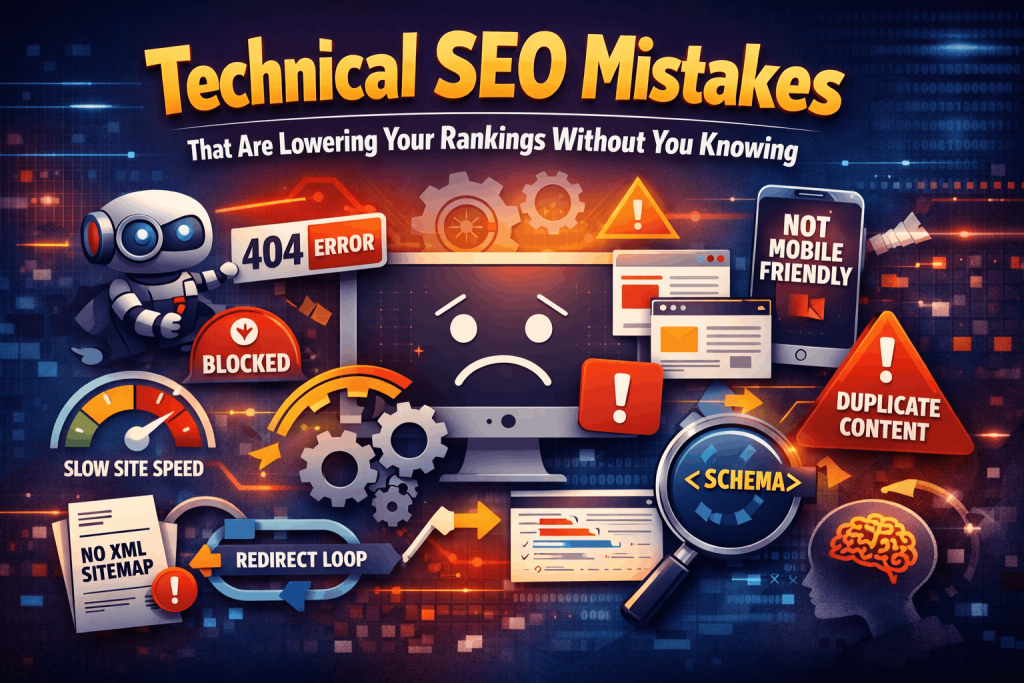
Even the best content might not be seen if these things aren’t optimized.
Search is moving toward AI SEO and AI indexing, which makes fixing technical SEO mistakes even more important.
Let’s look at the most common technical SEO mistakes that hurt rankings without anyone knowing it and how to fix them.
Why Technical SEO Is More Important Than Ever
It is like the base of your website’s visibility.
Search engines need to:
- Crawl your site
- Know what your content is about
- Make sure to index your pages correctly
- Give users a quick and easy experience
If any of these steps don’t work, the rankings will go down.
AI SEO systems are also used by modern search engines to look at the quality and structure of websites. These systems look at signals like:
- Core Web Vitals
- data that is organized
- Linking within
- site layout
This means that technical SEO mistakes now affects both AI-driven search results and traditional rankings.
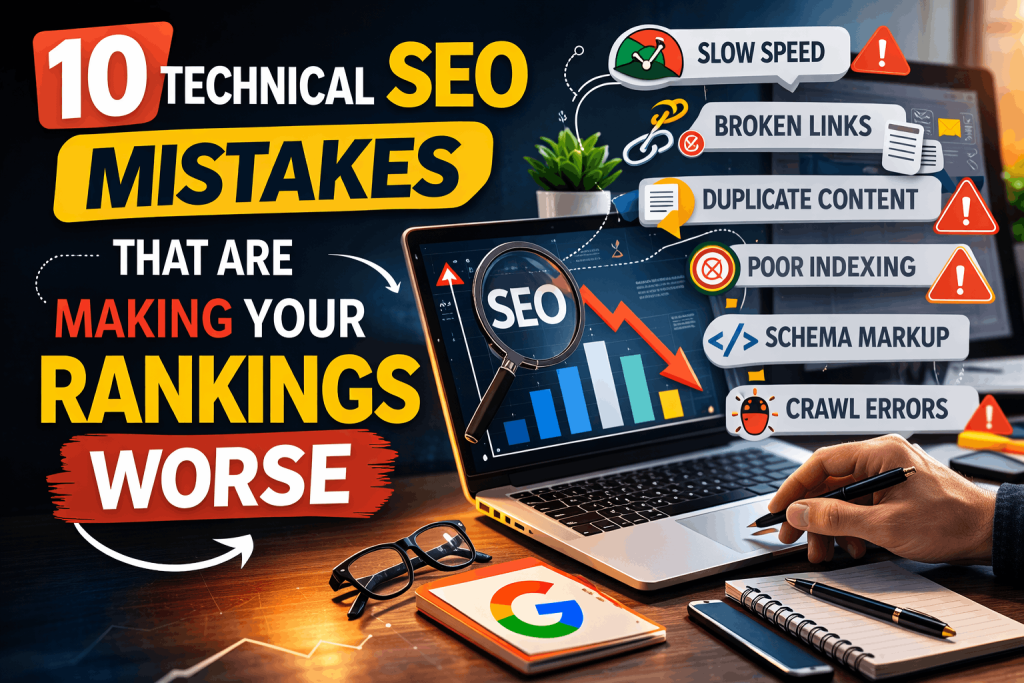
10 Technical SEO Mistakes That Are Making Your Rankings Worse
1. Poor Crawlability Blocking Search Engine Crawling
Before they can rank your website, search engines need to crawl it first. Google might miss important pages on your site if it has crawlability problems.
Some common reasons are:
- wrong settings in robots.txt
- Links that don’t work inside
- Navigation that isn’t well-organized
Improving the structure of your site makes it easier for search engines to crawl your pages.
2. Pages Not Being Indexed Correctly
Google may crawl a page, but it might not show up in search results because it can’t be indexed. Some common problems with indexing are:
- No index tags
- duplicate pages
- blocked URLs
Search engines are getting better at analyzing content thanks to AI indexing. People may just ignore pages with weak signals.
You can find these problems by checking Google Search Console on a regular basis.
3. Slow Loading Speed and Poor Page Performance
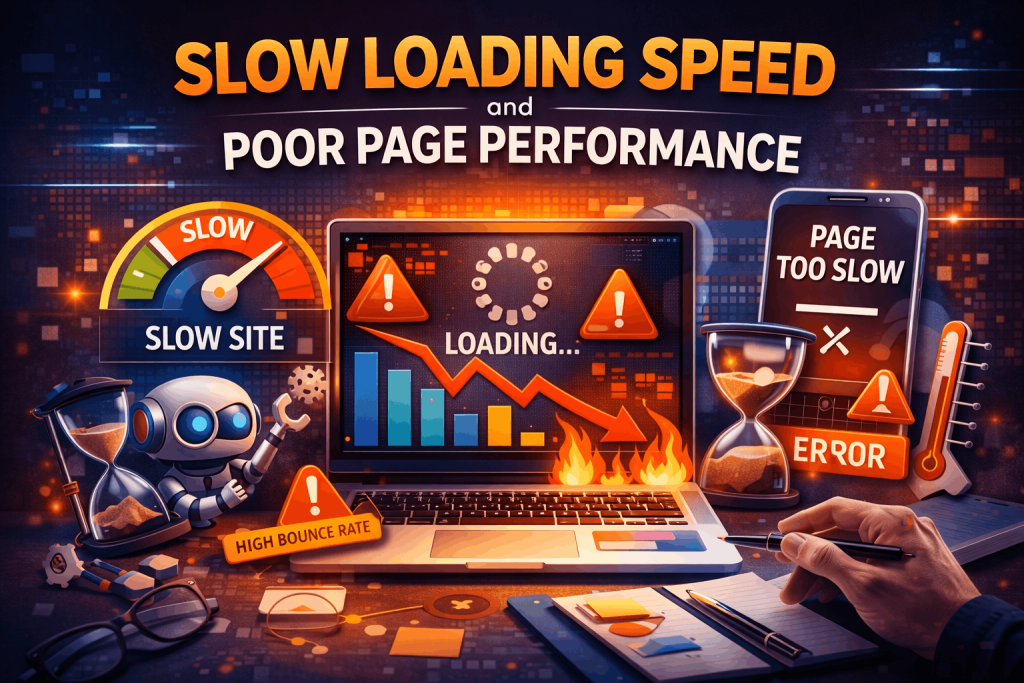
Speed is now a very important factor in rankings. Core Web Vitals are Google’s way of measuring performance. They look at things like:
- loading speed
- visual stability
- interactivity
Bounce rates go up and rankings go down when websites are slow. To make page speed optimization better, you can:
- compressing images
- reducing JavaScript
- enabling caching
A faster website improves both user experience and search rankings, and regularly reviewing a detailed page speed report can help identify exactly where performance issues are coming from.
4. Not having structured data
Search engines depend on structured data a lot to figure out what content is about. Your pages might miss out on rich search results without it.
It helps search engines figure out:
- products
- reviews
- FAQs
- articles
Adding schema markup to your pages lets them show up with better search features, such as rich snippets.
5. Duplicate Content Without Canonical Tags
Search engines get confused by duplicate content. They might have a hard time picking which page should be at the top. Canonical tags tell search engines which version of a page is the best one.
Without these, duplicate pages can:
- dilute ranking signals
- split backlinks
- reduce search visibility
Correct canonicalization makes sure that technical SEO mistakes don’t occur.
6. Poorly Built Website
Search engines have a hard time finding your content on a website that isn’t well-organized. A strong site architecture makes sure that:
- pages are logically organized
- important content is easily accessible
- internal linking is optimized
A clear structure makes it easier for search engines to crawl and for users to use.
7. Broken Links and 404 Errors
Broken links create a poor user experience and waste crawl budget. If search engines find too many mistakes, they may not crawl as often.
Common issues include:
- deleted pages without redirects
- outdated internal links
- incorrect URLs
Fixing broken links makes it easier for search engines to crawl your site and makes it healthier.
8. Ignoring AI SEO Signals
Search is moving toward AI-powered discovery. AI-powered algorithms look at websites to figure out:
- topic relevance
- content quality
- website structure
Ignoring technical SEO mistakes can reduce visibility in AI-generated search results. You can find ways to improve your website by using modern AI SEO tools.
9. Poor Internal Linking
Search engines can find new pages more easily when they are linked to each other. Important pages may stay hidden if they don’t have the right links. A good strategy for linking between pages on your own site makes:
- crawlability
- page authority distribution
- user navigation
It also helps AI systems figure out the order of your content and strengthens overall on-page SEO factors that influence rankings.
It also helps AI systems figure out the order of your content.
10. High Resolution Images and Unoptimized Media
Large images slow down websites significantly. This has an effect on page speed scores and Core Web Vitals. To optimize media, you can:
- compressing images
- using modern formats like WebP
- lazy loading images
Optimized media improves both performance and rankings.
How to Identify Technical SEO Mistakes
Finding Technical SEO Mistakes early stops ranking drops. There are a number of tools that can help you do a technical audit:
SEO audit tools
- Google Search Console
- Screaming Frog
- Ahrefs Site Audit
- SEMrush Site Audit
These tools find problems with:
- crawlability
- indexability
- structured data errors
- page speed issues
Regular audits help maintain strong technical SEO health and reduces Technical SEO mistakes.
Technical SEO Mistakes Checklist for 2026

- Follow this list to keep your website healthy.
- Make sure that search engines can still crawl your site
- Improves crawling with better internal links
- Fix indexability issues in Search Console
- Use structured data and schema markup
- Optimize Core Web Vitals performance
- Use canonical tags for duplicate content
- Make the site’s structure and navigation better
- Perform page speed optimization
- Monitor AI indexing behavior
- Use modern AI SEO tools for insights
Using this list will help you stay at the top of both traditional and AI-driven search engines.
Conclusion:
A lot of websites drop in rank not because their AI content is bad, but because of technical SEO mistakes that aren’t obvious.
Problems like:
- slow page speed
- poor crawling structure
- missing schema markup
- Wrong indexing
These can silently damage your visibility.
As search continues evolving and changing with AI SEO and AI indexing, technical optimization is becoming even more important.
Regularly checking your website and fixing these problems will make sure that search engines can crawl, understand, and rank your content correctly.
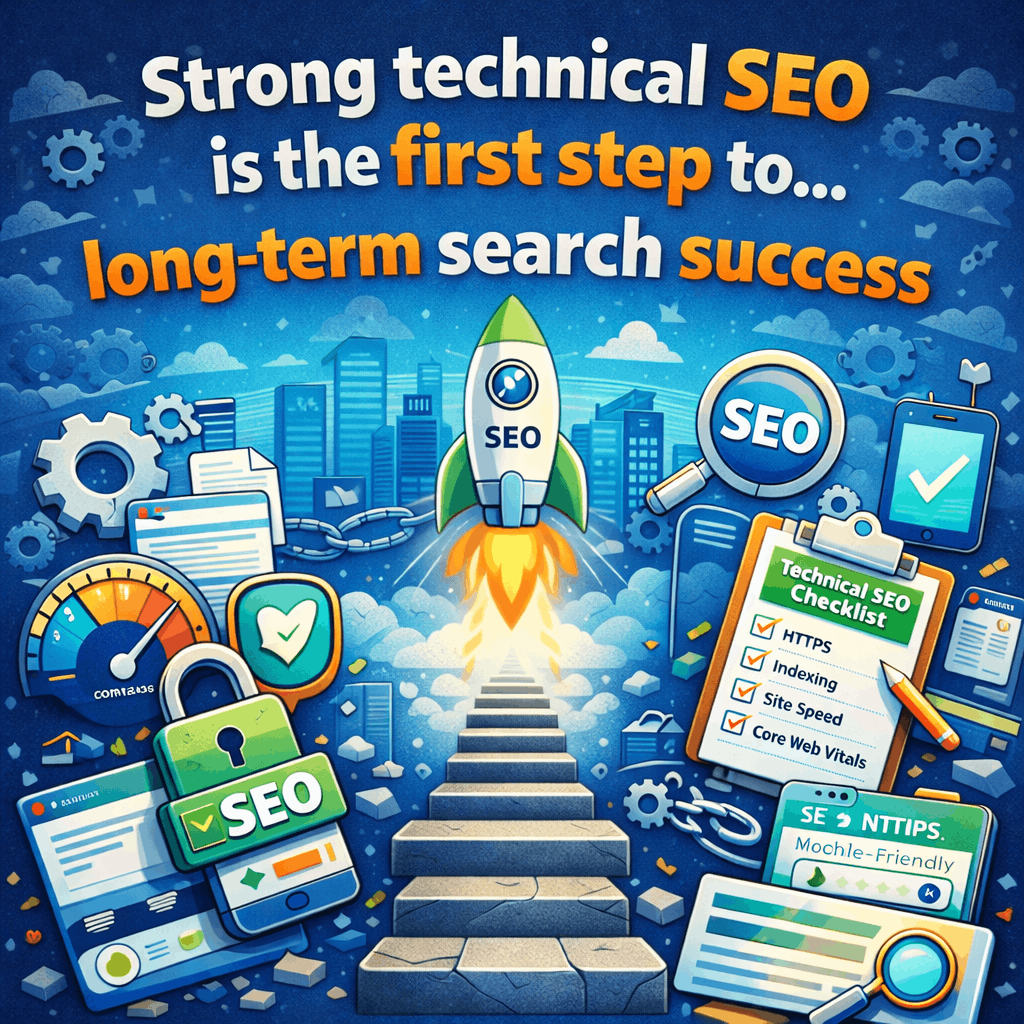
Strong technical SEO is the first step to long-term search success.