Search is evolving faster than ever. Traditional ranking methods are no longer the only determinant for Google visibility. With the introduction of Google AI Search Mode, we are beginning to see a shift in how users find information online towards AI-generated answers, conversational search experiences and predictive results.
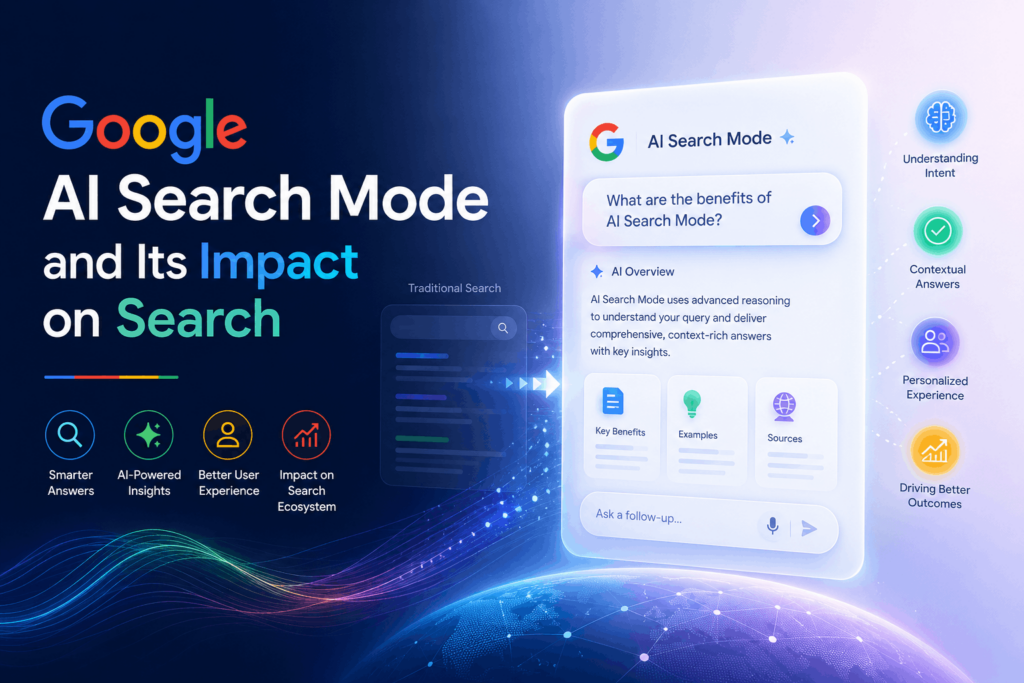
Google AI Search Mode is becoming increasingly important for businesses, publishers, and SEO professionals. Search visibility today is no longer just about showing up in the blue links. However, strong SEO fundamentals still remain important even as AI-driven search evolves. Today, AI-generated summaries, contextual answers and interactive experiences are becoming part of the user journey.
In this guide, we’ll talk about what Google AI Search Mode is, how it works, and its potential real impact on search rankings, traffic, SEO strategies, and user behavior in 2026 and beyond.
What Is Google AI Search Mode?
Google AI Search Mode is Google’s AI-powered search experience, where generative AI is embedded directly into search results. It does more than display traditional links; it offers summary answers, conversational responses, suggestions, and contextual information directly on the search page.
Google AI Search is built to help users get faster, more useful answers without having to visit multiple websites.
Google’s AI Search Mode is different from the existing Google AI search systems that mainly rank web pages. Google AI Mode tries to understand intent, context and follow-up questions in a more human-like way.
This is part of a broader evolution toward AI-mode experiences where search engines function more like intelligent assistants than mere indexing systems.
How Google AI Search Mode Works?
Google AI Search Mode is a combination of different technologies like:
Google AI Search Mode Uses Large Language Models
AI Search Mode uses large language models to generate natural language responses based on indexed web content, search intent, and context understanding.
Google AI Search Mode works by trying to understand the intent behind queries, rather than just matching keywords.
Google AI Search Mode Analyzes Search Intent
One of the biggest changes in Google AI Search Mode is its ability to analyze the user intent to the depths. AI mode systems are able to understand the following:
- Informational intent
- Transactional intent
- Local intent
- Conversational search behavior
- Multi-step queries
This makes AI Mode more dynamic than traditional Google AI search.
Google AI Search Mode Creates AI Summaries
In Google AI Search mode, you’ll often get AI summaries rather than traditional search results. These summaries could contain:
- Key answers
- Website references
- Product suggestions
- Step-by-step explanations
- Contextual insights
This directly changes how users interact with search results.
Why Google AI Search Mode Matters for SEO?
Google AI Search Mode is shaping up to be one of the biggest changes in SEO history.
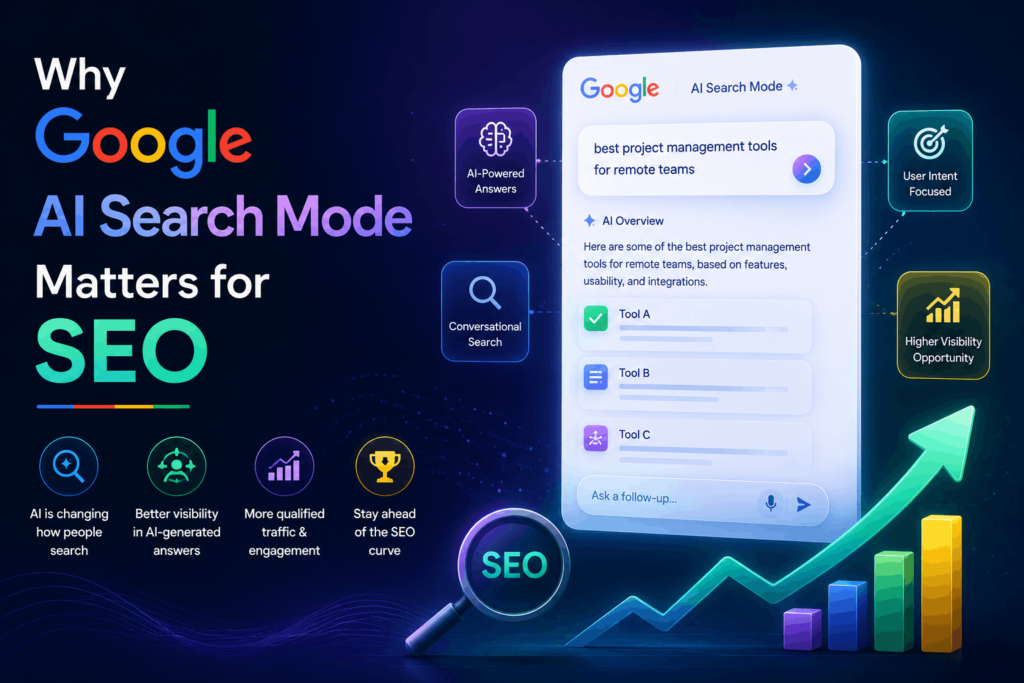
Traditional SEO was all about rankings and click-through rates. But Google AI Search Mode changes how visibility works, as users can get answers directly inside Google.
Google AI Search Mode Reduces Traditional Clicks
One major impact of Google AI Search Mode is the decrease in organic clicks for informational searches.
If users are given direct answers from AI, they may click less on websites than they do now.
What this means is that businesses need to rethink how they optimize content for Google AI Search Mode visibility. Many brands are now investing in AI search optimization to improve visibility in AI-generated search experiences.
Google AI Search Mode Rewards High-Quality Content
Google AI Search Mode does create summaries, but it still depends on trusted sources for information.
Content that demonstrates:
- Expertise
- Authority
- Trustworthiness
- Original insights
- Clear structure
This has a higher chance of being referenced within Google AI Search Mode responses.
Google AI Search Mode Changes Keyword Strategy
Traditional keyword stuffing becomes less effective in Google Search Mode.
Instead, content should focus on:
- Semantic relevance
- Topic depth
- Conversational phrasing
- User intent
- Contextual optimization
That’s why modern Google AI search optimization now places more emphasis on topical authority rather than just repeating exact-match keywords.
How Google AI Search Mode Impacts Website Traffic?
Google AI Search Mode could completely change traffic in many industries.
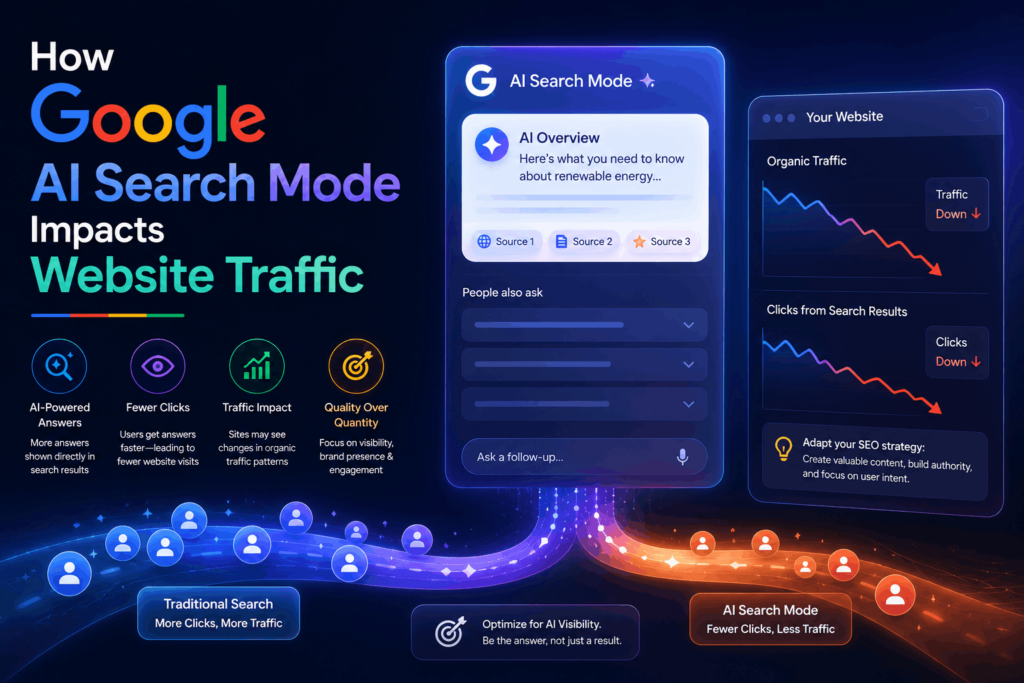
Google AI Search Mode Could Reduce Informational Traffic
Websites heavily dependent on informational blog traffic might experience reduced clicks as Google AI Search Mode delivers quick answers directly in SERPs.
For example:
- Definitions
- Basic tutorials
- Simple FAQs
- Quick comparisons
It may increasingly be answered directly through AI mode experiences.
Google AI Search Mode Could Increase Qualified Traffic
With Google AI Search Mode, even if overall traffic drops, traffic quality could improve.
Users who click through after reading AI summaries may have stronger intentions and conversion potential.
This means businesses should focus more on:
- User experience
- Conversion optimization
- Authority building
- Unique insights
rather than only maximizing traffic volume.
How Businesses Should Adapt to Google AI Search Mode?
Companies that are ahead of the curve on Google AI Search Mode will likely have a big advantage.
Google AI Search Mode Requires Topical Authority
Creating many pieces of content that are interconnected around one topic will help Google AI Search Mode understand expertise.
Brands should be creating topic clusters, not individual blogs.
Google AI Search Mode Prefers Structured Content
Content optimized for Google AI Mode should include:
- Clear headings
- Short paragraphs
- Bullet points
- FAQ sections
- Schema markup
Data structured in a way that makes it easy for AI systems to extract and summarize information is more effective.
Google AI Search Mode Rewards Unique Insights
AI-generated answers often summarize information that is readily available.
Businesses should publish to stand out in Google AI Search Mode:
- Original research
- Case studies
- Real experiences
- Expert commentary
- Industry insights
Unique content boosts your chances that Google AI search experiences will cite it. Many businesses are now trying to get cited by AI tools to increase visibility inside AI-generated answers.
Google AI Search Mode and User Behavior
User behavior is rapidly changing because of AI mode experiences.
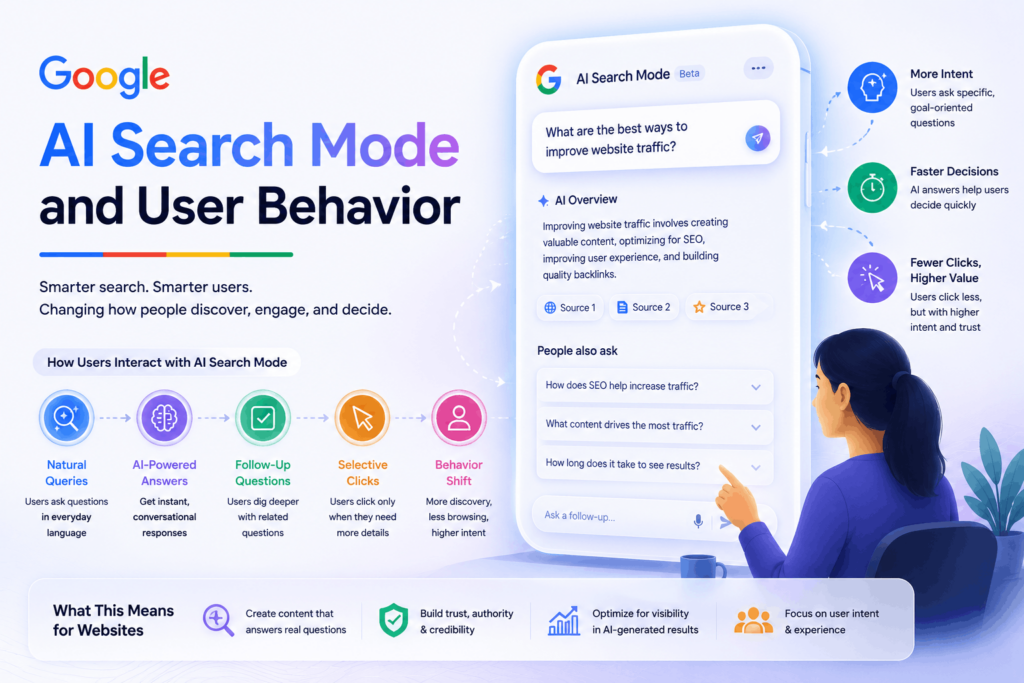
Google AI Search Mode Encourages Conversational Search
Users are starting to search with longer, more conversational queries.
Examples include:
- “What is the best SEO strategy for AI search?”
- “How does Google AI Search Mode affect rankings?”
- “Can AI mode reduce organic traffic?”
That means content creators need to optimize for natural language patterns.
Google AI Search Mode Changes Search Expectations
Modern users expect:
- Faster answers
- Personalized responses
- Context-aware information
- Interactive experiences
Google AI Search Mode has been designed to meet these expectations.
With the increase in AI mode adoption, websites should focus on creating helpful and user-focused content rather than outdated SEO tactics.
Challenges Created by Google AI Search Mode
Google AI Search Mode is innovative, but it also has its challenges.
Google AI Search Mode May Reduce Publisher Visibility
Small publishers could lose out if AI summaries reduce the number of visits to their websites.
This situation creates concerns about the following:
- Ad revenue
- Organic visibility
- Content attribution
- Traffic sustainability
Google AI Search Mode Increases Competition
As AI mode matures, there may be more competition for authoritative citations.
Businesses will need stronger branding, better expertise signals and higher quality content to remain visible in Google AI Search Mode.
Google AI Search Mode Requires Continuous Adaptation
SEO strategies may need to be updated more frequently because AI-driven systems change quickly.
Businesses that ignore Google AI Search Mode risk diminishing visibility over time.
The Future of Google AI Search Mode
Google AI Search is likely just the beginning of a much larger transformation of search technology.
Future AI mode experiences may include:
- Personalized AI assistants
- Real-time contextual search
- Voice-driven AI search
- Predictive recommendations
- Multi-modal search experiences
Traditional search rankings are only part of the overall visibility.
As Google AI search technology develops, businesses need to focus on becoming trusted sources of information, rather than just chasing rankings.
Final Thoughts on Google AI Search Mode
Google AI Search Mode is changing the future of search, SEO and digital visibility.
As AI generates answers and search experiences become conversational, businesses will need to rethink traditional optimization strategies. Ranking alone is not sufficient. Successful brands in Google AI Search Mode now need authority, trust, topical relevance and user-focused content.
AI mode will cut out some of this sort of traffic, but will also open up opportunities for businesses that deliver high-quality and truly helpful content.
The future of Google AI search will likely reward brands that are early adopters, publish authoritative information and have real expertise online.
What is AI Search Mode understanding today, and one of the biggest SEO advantages that companies can have in the coming years.